|

THE
WATSON FAMILY -
On a road trip to
Glastonbury, the magic Dinobot picks up signals left by Merlin the
Magician, from Ley Lines pointing to Camelot.
Somerset Council, known until 1 April 2023 as Somerset County Council, is the unitary authority that governs the district of Somerset, which occupies the southern part of the ceremonial county of the same name in the South West of England. The council has been controlled by the Liberal Democrats since the 2022 local elections, and its headquarters is County Hall in Taunton.
The council is the successor to the county council of the administrative county of Somerset, which was created on 1 April 1889. The council was abolished and reconstituted in 1974, when local government in England was reformed and a non-metropolitan county of Somerset was created, governed by a county council and five, later four, district councils. The districts were abolished in 2023 and the county council took on their responsibilities, becoming a unitary authority.
The Conservative Party has been the largest or second-largest party on the council since 1973, and since 1981 has competed with the Liberal Democrats for control; each party has formed several majority administrations in the period since.
GOVERNANCE
Somerset Council provides both county-level and district-level functions. The whole county is also covered by civil parishes, which form a second tier of local government.
Somerset Council appoints seven members to the Devon and Somerset Fire and Rescue Authority.
The council has been under Liberal Democrat majority control since 2022.
PREMISES
The council has its headquarters at County Hall on The Crescent in Taunton, which was purpose-built for the council and opened in 1935. The complex has been subsequently extended, notably with a large tower block in the 1960s.
When first created in 1889, the council chose to meet at Shire Hall in Taunton, a courthouse completed in 1858 which had been one of the meeting places of the quarter sessions which preceded the county council. County Hall was built immediately to the east of Shire Hall to accommodate the council's offices, but full council meetings continued to be held in the council chamber at Shire Hall until 2020. In-person council meetings were suspended in 2020 due to the
COVID-19 pandemic. Since the resumption of in-person meetings in 2021, full council meetings have been held in various larger venues across the county, initially to allow for social distancing and since 2022 to accommodate the larger number of councillors.
The council has several other administrative buildings across the county, including the offices of the former district councils that it inherited in 2023. As at March 2024 the council was considering its options for how to reduce the number of buildings it operates.
FUNDING CUTS
Somerset County Council needed to save £19.5 million in 2017/18, but only cut £11.1 million. Cuts were announced to highways, public transport and special needs services. Staff were told to take two days off unpaid for the coming two years. The chief executive said he had "no choice" because of cuts to central government funding. Further proposed cuts include reducing winter gritting, suspending 'park and ride' services, stopping funding for Citizens Advice, cutting adult social care and support for people with learning difficulties, cuts to the GetSet programme which helps stop vulnerable young people needing social care.
In July 2018, two senior Conservative councillors resigned over concerns regarding the council's handling of financial matters. Dean Ruddle and Neil Bloomfield had previously held roles as the respective chair and vice chair of the audit committee. An official audit of the council criticised its "pervasive" overspending and its failure to deliver sufficient savings over the previous 12 months. In September 2018, the council voted through £28 million of spending cuts, spread over the next two years. Critics of the cuts, including
Labour and
Liberal Democrat councillors, noted that between 2009 and 2016, Somerset's
Conservative administration had voted to freeze Council Tax, when an increase of 1.9% would have brought in an additional £114 million.
Following the change to unitary status, in November 2023 the council declared a financial emergency, projecting an overspend of £27 million in that year and a deficit of £100 million for 2024–2025, arising in part from an expected increase of £70 million in the cost of adult social care. It was also reported that the council had inherited Council Tax arrears of more than £43
million from the four district councils.
PARISH COUNCILS
The ceremonial county of Somerset, England is divided into 417 areas known as civil parishes, which are lowest unit of local government in England. Parishes arose from Church of England divisions, and were given their current powers and responsibilities by the Local Government Act 1894. The Local Government Act 1972 retained civil parishes in rural areas. Many former urban districts and municipal boroughs were replaced by new successor parishes; urban areas that were considered too large to be single parishes became unparished areas.
The ceremonial county of Somerset is currently governed by three unitary authorities: Bath and North East Somerset Council (B&NES), North Somerset Council, and Somerset Council.
Modern local government in Somerset began in 1889, when an administrative county was created and Somerset County Council was established; Bath was administered separately as a county borough.
In 1974, the county and council were abolished and replaced by two two-tier non-metropolitan counties, Somerset and Avon. Somerset was governed by a reconstituted county council and five districts: Mendip, Sedgemoor, South Somerset, Taunton Deane and West Somerset. Taunton Deane was granted borough status that same year. Avon consisted of six districts, of which three were created from areas formerly part of Somerset: Woodspring, Wansdyke, and Bath.
In 1996, Avon was abolished and its districts were renamed and reorganised into unitary authorities. Woodspring was renamed 'North Somerset' and Wansdyke and Bath were abolished and a new district covering the same area created, named 'Bath and North East Somerset'. In 1997 the two districts and non-metropolitan county became part of the new ceremonial county of Somerset. On 1 September 2019 the non-metropolitan districts of West Somerset and Taunton Deane merged, with the new district being called Somerset West and Taunton.
In 2023, the non-metropolitan county was reorganised by abolishing the four districts and their councils and reconstituting Somerset County Council as a unitary authority for the non-metropolitan county, with the powers of both a district and county council, renamed Somerset Council. The two existing unitary authorities were not altered.
The city of Bath is the largest centre of population in Bath and North East Somerset. Areas of the city that were formerly within the Bath County Borough are now unparished, but the rest of the authority is divided into 49 parishes. All of North Somerset, the other unitary authority, is covered by its 39 parishes ranging from the village Loxton with a population of 192, to the town of Weston-super-Mare with 76,143 inhabitants.
In the Somerset unitary authority area, the largest settlement is Taunton, with a population of 60,479. All the district is parished.
PARISH HISTORY
Parishes arose from Church of England divisions, and were originally purely ecclesiastical divisions. Over time they acquired civil administration powers. The Highways Act 1555 made parishes responsible for the upkeep of roads. Every adult inhabitant of the parish was obliged to work four days a year on the roads, providing their own tools, carts and horses; the work was overseen by an unpaid local appointee, the Surveyor of Highways. The poor were looked after by the monasteries, until their dissolution. In 1572, magistrates were given power to 'survey the poor' and impose taxes for their relief. This system was made more formal by the Poor Law Act 1601, which made parishes responsible for administering the Poor Law; overseers were appointed to charge a rate to support the poor of the parish. The 19th century saw an increase in the responsibility of parishes, although the Poor Law powers were transferred to Poor Law Unions. The Public Health Act 1872 grouped parishes into Rural Sanitary Districts, based on the Poor Law Unions; these subsequently formed the basis for Rural Districts. Parishes were run by vestries, meeting annually to appoint officials, and were generally identical to ecclesiastical parishes, although some townships in large parishes administered the Poor Law themselves; under the Parishes Act 1882, all extra-parochial areas and townships that levied a separate rate became independent civil parishes.
Civil parishes in their modern sense date from the Local Government Act 1894, which abolished vestries; established elected parish councils in all rural parishes with more than 300 electors; grouped rural parishes into Rural Districts; and aligned parish boundaries with county and borough boundaries. Urban civil parishes continued to exist, and were generally coterminous with the Urban District, Municipal Borough or County Borough in which they were situated; many large towns contained a number of parishes, and these were usually merged into one. Parish councils were not formed in urban areas, and the only function of the parish was to elect guardians to Poor Law Unions; with the abolition of the Poor Law system in 1930 the parishes had only a nominal existence. The Local Government Act 1972 retained civil parishes in rural areas, and many former Urban Districts and Municipal Boroughs that were being abolished, were replaced by new successor parishes; urban areas that were considered too large to be single parishes became unparished areas.
CURRENT POSITION
Recent governments have encouraged the formation of town and parish councils in unparished areas, and the Local Government and Rating Act 1997 gave local residents the right to demand the creation of a new civil parish. A parish council can become a town council unilaterally, simply by resolution; and a civil parish can also gain city status, but only if that is granted by the Crown. The chairman of a town or city council is called a mayor. There are currently 28 civil parishes in the county with the status of a town, and one (Wells) with city status. The Local Government and Public Involvement in Health Act 2007 introduced alternative names: a parish council can now choose to be called a community; village; or neighbourhood council.
MAGIC DINOBOT CAST
|
PROTAGONISTS |
- |
DESCRIPTION |
|
- |
- |
- |
|
Anthony
Maximus Antonious Decimus Meridius |
- |
The
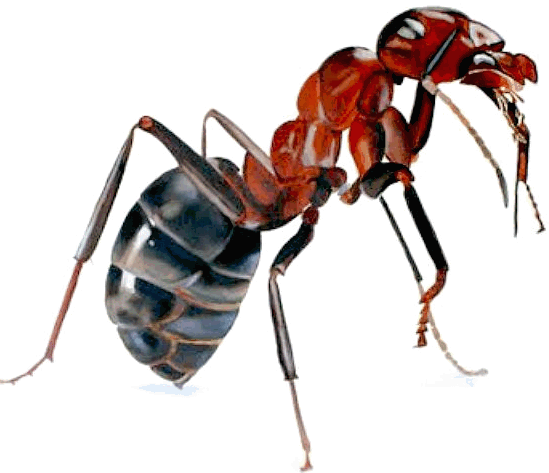
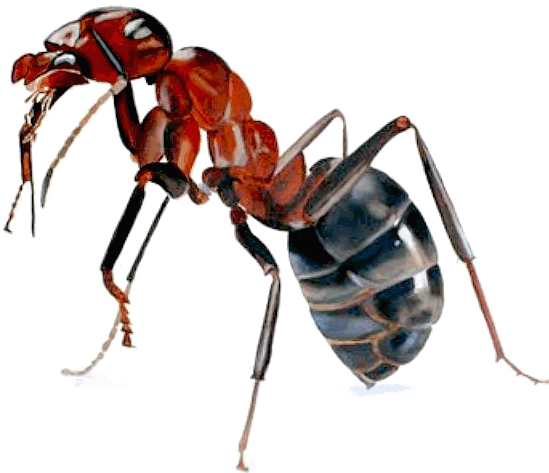
DinoBot hexapod AI activated, modern autonomous gladiator |
|
Avalon |
- |
The
legendary burial place of King Arthur at Glastonbury Tor |
|
Camelot |
- |
The
legendary castle and court of King Arthur Pendragon |
|
Charley
Temple |
- |
A
well meaning investigative
reporter, Keeper of the Scottish Secret |
|
Excalibur |
- |
The
fabled magical sword of Uther Pendragon |
|
Father
Christmas |
- |
Santa
Claus |
|
Felicity
Victoria
Morrell |
- |
Headmistress,
Church of England primary school
Herstmonceux |
|
Field
Marshall Sir Rodney Dunbar |
- |
MI6
robotics & human enhanced soldiers R&D |
|
Great
Papa Elf |
- |
Wisest
of the Elves, keeper of the Book of Dreams |
|
Hamish
MacGregor |
- |
Landlord
of 'The Kelpie's Bridle' public house, & Secret Keeper |
|
Hannibal
Henderson |
- |
Physics
teacher, Hailsham Community College |
|
Jimmy
Watson |
- |
Programming
boy genius |
|
Julia
Roberts |
- |
A
Mathlete & Jimmy's ally |
|
Lady
Of The Lake |
- |
Guardian
and enchantress, giver of Excalibur (Demoiselle du Lac) |
|
Lady
Penelope Moneysworth DBE |
- |
Private
Secretary to the King & Queen |
|
Ley
Lines |
- |
Alignments between historic
landmarks and prehistoric sites |
|
King
Arthur Pendragon |
- |
Legendary
King thought to have lived between 500 - 540 ad |
|
King
Charles III |
- |
British
& Commonwealth head of state |
|
Knights
Templar |
- |
Crusades,
Soldiers
of Christ religious wars, Catholic
military order |
|
Marion
Watson (Mrs) |
- |
Wife
of Timothy, mother of Jimmy, retired teacher |
|
Merlin
the Magician |
- |
Very
clever royal advisor to Uther Pendragon and King Arthur |
|
Miss
Ocean |
- |
Marion
Watson's cherished
VW
surfing
bus, tour wagon |
|
Nessie |
- |
The
Loch
Ness Monster, folklore evolutionary Plesiosaur
legend |
|
Peter
Colin Morgan |
- |
Headmaster,
Hailsham Community College |
|
Queen
Camilla |
- |
Consort
to King Charles III |
|
Reginald
Roger Rippengall |
- |
Teacher,
technical & IT, Hailsham Community College |
|
Rohan
MacLeod |
- |
Professor
of evolutionary biology, studying Loch Ness |
|
Sea
Glass |
- |
Quartz
black box, toxic microplastic, human health footprint |
|
Solar
Cola |
- |
An
alternative soft drink, as a refreshing energy boost |
|
Somerset
Council |
- |
A
history of this administrative area of the United Kingdom |
|
Edward
Thomas |
- |
British
Prime Minister, an unusually honest politician |
|
President
Lincoln Truman |
- |
President
of the United States of America |
|
Timothy
Watson |
- |
British
(MI6) Army
General, stationed in Germany |
|
Tintagel
Castle |
- |
A
medieval site on the Cornish, Atlantic coast |
|
- |
- |
- |
|
CHARACTERS:
ANTAGONISTS |
- |
DESCRIPTION |
|
|
- |
|
|
Angus
Campbell |
- |
Famous
debunker, determined to prove 'Nessie' is a hoax |
|
Chief
Inspector Basil Rathbone |
- |
Scotland
Yard, Metropolitan police commissioner |
|
Chief
Inspector
Nigel Matthew Coltman |
- |
Stationed
at Deer Paddock, Hailsham, Sussex police |
|
Detective
Sergeant DS Harriet Rose Winter |
- |
Special
adolescent public protection liaison officer MAPPA |
|
Ford
Transit |
- |
Custom
police van,
high-tech mobile command unit: The Eye |
|
Harold
Holland |
- |
Chief
Constable, Metropolitan police, Scotland Yard |
|
Jamie
Moonlight |
- |
School
chum of Johnny Baxter, bully & vandal who hates nerds |
|
Johnny
Baxter |
- |
School
bully, Jimmy's nemesis (The Johnson) |
|
Jack
Mason |
- |
US
CIA operative, enhanced soldiers programme DARPA |
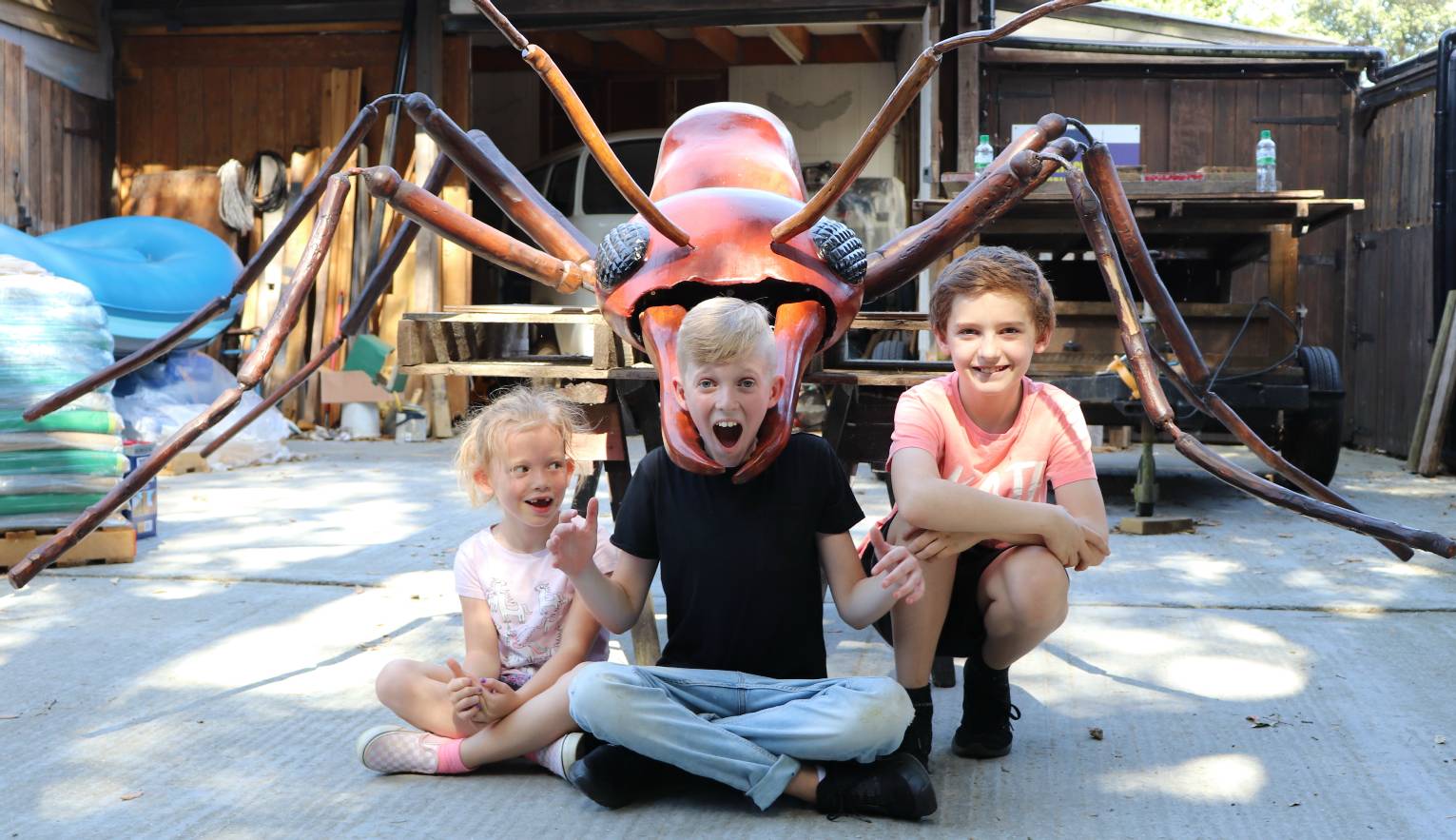
Some
of Jimmy Watson's friends, with the Magic Dinobot
CHAPTERS
- CHARACTERS
- FILMS
- MAGIC
- PLOT
OUTLINE
|